

Almost every morning I walk 10 kilometres along the beaches of Vila Nova de Gaia. Among other things, I breathe and clear my mind. As I walk, I listen to podcasts or audiobooks that interest me.
In some of those podcasts I have heard the stories of Arab, Jewish and Mexican migrants, from different contexts and periods. In many cases, migrants find opportunities in the places they reach and prosper because the people already living there do not see those opportunities, or because the destination itself is still taking shape.
These migrants transform their lives and their surroundings through the difficulties involved in moving, while also provoking resentment among local people because they are different.
Successful examples include Lebanese people who arrived in Mexico; Jewish people who, throughout their enduring persecution, have migrated and prospered; Mexicans who crossed the Rio Grande and achieved the diminished American dream; and people from Mexico’s provinces who moved to the capital, considerably improving their quality of life and broadening their minds.
These migrants firmly planted in their descendants the ideas, traditions and ways of prospering and understanding the world that, I insist, enrich the cultures of the places they reach.
I find a constant in these examples: where they arrived, there were opportunities that others did not see or take. And when this happens, their presence and success also provoke hostility, expressed in stereotypes: Jewish loan sharks, greedy Arabs, opportunistic Mexicans, barefoot Indians. These people have contributed not only to improving their own lives and those of their families, but also positively to the communities where they settle.
For much of the Middle Ages and the early modern period, Jewish people in Europe faced restricted access to certain professions not because they lacked ability or vocation, but because of a systematic web of religious, legal and social restrictions that excluded them. Understanding which occupations they could not practise, and why, reveals how belonging, work and recognition have historically operated as mechanisms of inclusion or expulsion.
In the medieval Christian world, Jews were tolerated but not considered full members of the political community. Their presence was justified theologically as testimony to Christian truth, but this tolerance entailed subordination. Under this logic, they were forbidden to exercise authority over Christians, automatically excluding them from public office, administrative roles and institutional teaching. They could not represent power or embody the law because they were not recognised as a legitimate part of society.
Alongside this religious exclusion stood a decisive economic barrier: the guild system. Most urban trades—carpentry, blacksmithing, baking, shoemaking, construction and weaving—were regulated by corporations that controlled production and access to work while also functioning as religious communities. Joining a guild required being Christian, swearing on Christian symbols and observing the liturgical calendar. Consequently, Jews were excluded from almost all the skilled manual trades underpinning Europe’s urban economy.
In many territories, Jews were forbidden to own land or join rural communities, shutting them out of agriculture, the main source of subsistence in pre-industrial Europe. Denied both rural and urban economic foundations, they were pushed into legal dependency and constant mobility. In several kingdoms they were regarded as servi camerae regis, the sovereign’s fiscal property, which reinforced their insecurity: they could be protected, but also taxed, expelled or dispossessed according to political convenience.
Access to universities and the liberal professions was similarly restricted. Medieval universities were Christian institutions, and the study of law, theology or higher education was virtually closed to them.
Medicine was a partial exception: some Jewish physicians achieved prestige and served kings and nobles, but always as exceptional figures, tolerated for their usefulness rather than recognised as equals.

Faced with this situation, Jews concentrated on the few activities still open to them: trade, especially over long distances, economic intermediation and, particularly, moneylending. This last activity was possible because the Church prohibited Christians from charging interest, while Jews were not subject to that canon law. Paradoxically, a necessary but morally condemned economic function was delegated to an excluded minority, who would then be stigmatised precisely for performing it.
The consequences of this system were profound and lasting. Forced concentration in certain economic niches generated stereotypes that concealed their structural origins. Constant mobility, resulting from expulsions and persecution, reinforced the migratory character of Jewish communities.
By the late nineteenth and early twentieth centuries, many European Jews were formally emancipated. In countries such as Germany, France and the Austro-Hungarian Empire, they participated actively in economic, cultural and scientific life. Yet this integration was legal rather than social. Racial, nationalist and conspiratorial antisemitism persisted, based no longer solely on religion but on the idea that Jews were a “foreign body” within the nation.
In Eastern Europe—the Russian Empire, Poland and Ukraine—the situation was far more precarious. Pogroms, violent collective attacks against a minority, residential restrictions in the Pale of Settlement, structural poverty and recurring violence drove millions of Jews to emigrate between 1880 and 1914, mainly to the United States, Argentina and other countries in the Americas. This was the first great modern wave.
First came legal exclusion through the Nuremberg Laws, then expropriation, open violence during Kristallnacht and finally genocide. Between 1933 and 1939, hundreds of thousands of Jews tried to flee Germany and Austria. But the world did not welcome them: closed borders, refused visas and international conferences without meaningful commitments.
During the Holocaust (1941–1945), migration ceased to be an option for millions. Six million Jews were murdered. Survivors were left, literally, without a world: without homes, families or countries to return to.
Sustained Jewish migration to Argentina began around 1880 and continued until the mid-twentieth century. Most came from Eastern Europe—Russia, Poland, Ukraine and Lithuania—although Sephardic Jews also arrived from the Ottoman Empire.
Argentina offered a distinctive attraction: vast territories, a relatively open migration policy and a state narrative promoting immigration as an engine of modernisation. For many Jews, it was one of the few viable destinations as other countries began closing their borders.
A distinctive feature of Jewish migration to Argentina was the agricultural colonisation project, promoted by the Jewish Colonization Association (JCA), founded by Baron Maurice de Hirsch. From the 1890s, colonies were established in provinces including Entre Ríos, Santa Fe and Buenos Aires.
These colonies sought more than economic subsistence: they aimed to transform European Jews, associated with urban commerce, into modern farmers fully integrated into Argentina’s productive ideal. From this emerged the figure of the Jewish gaucho, immortalised by Alberto Gerchunoff, symbolising a hybrid identity combining Jewish tradition and national belonging.
Argentina’s Jewish community was ideologically diverse. Religious, socialist, anarchist, Zionist and liberal currents coexisted. This plurality made Argentina a leading centre of Jewish culture in the Spanish-speaking world.
Jewish people in Argentina have played prominent roles in science, medicine, education, commerce, the arts and intellectual life. Jewish writers, scholars and artists made decisive contributions to national culture, often reflecting on the immigrant experience and the memory of exile.
Jewish migration to Argentina is one of the most significant chapters in the country’s migration history and, at the same time, one of the most complex diasporic experiences in the modern Jewish world. Its importance lies not only in its scale—Argentina came to host Latin America’s largest Jewish community—but in how it combined refuge, social endeavour and identity formation within a nation that conceived of itself as a country of immigration.
Lebanese migration in the nineteenth century marks the structural beginning of the modern Lebanese diaspora. It was not yet a mass exodus comparable to that of the twentieth century, but it was the moment when emigration stopped being episodic and became a sustained social strategy, passed down through generations. Its causes combined political violence, economic transformation and an early familiarity with mobility.
During the nineteenth century, the territory of present-day Lebanon belonged to the Ottoman Empire and was organised into relatively autonomous religious communities, particularly in Mount Lebanon. This autonomy was fragile, however. Coexistence between Maronites, Druze and other communities was periodically disrupted by political, economic and religious tensions, exacerbated by European powers that exploited local divisions.
The turning point was the violence of 1860, when clashes between Druze and Maronites led to massacres, particularly of Maronite Christians, and the destruction of entire villages. For many families, emigration became a realistic, even necessary option.
The first Lebanese departures in the nineteenth century were modest and close to home: Egypt, Anatolia, North Africa and a few Mediterranean port cities. Towards the end of the century, however, the opening of transatlantic sea routes and the relative ease of entering the Americas transformed the migration horizon.
Nineteenth-century Lebanese migrants were usually young, predominantly Christian, though not exclusively, and relatively literate for their rural context. They did not necessarily emigrate to sever ties with their communities, but with the expectation of returning with resources. In many cases that return never happened, but ties to home were maintained through letters, remittances and marriages arranged at a distance.
Here a central feature of Lebanese migration took shape: the diaspora as an extension of home, rather than its negation.
Lebanese migration in the twentieth century was one of modernity’s great diasporic movements, comparable in scale and cultural impact to those of other Mediterranean peoples. Rather than a single, homogeneous migration, it was a prolonged, staggered process with multiple causes, marked by recurring political crises, economic transformations and the ability of family networks to sustain long-distance mobility.
A decisive episode was the Great Famine of Mount Lebanon (1915–1918), caused by the Allied blockade, Ottoman requisitioning and a locust plague. A significant proportion of the population died. This collective trauma established emigration not merely as an economic option but as a survival strategy.
After the war, the collapse of the Ottoman Empire and the establishment of the French Mandate in 1920 reshaped Lebanese territory. Although the new state promised stability, it also introduced identity tensions, regional inequalities and an economy dependent on external forces. In this context, emigration became a normal life prospect: leaving did not mean abandoning the country, but supporting it from abroad through remittances, trade and eventual return.
The United States was an early destination, but Latin America soon became a central one. Brazil, Argentina, Mexico and other countries offered commercial opportunities and fewer immigration restrictions. Lebanese migrants, registered as “Syrians” or “Turks” because of their Ottoman documents, worked as itinerant traders, building networks that facilitated further chain migration.
Unlike some other rural migrations, many Lebanese migrants were literate young people with commercial experience. This helped them establish themselves as street vendors, textile traders and small business owners. Over time, these activities expanded into industry, banking and local politics in their host countries.
Today, the Lebanese diaspora is numerically comparable to, or even larger than, the population living in Lebanon. This diaspora is not merely a historical consequence but a constitutive element of contemporary Lebanese identity. Remittances, business networks and cultural exchange have been fundamental to the country’s survival during recurring crises.
Unlike other migration experiences marked by rupture, Lebanese migration has operated through distributed belonging: one can live abroad without ceasing to belong, and belong without physically residing in the territory.
Twentieth-century Lebanese migration was neither an accident nor an anomaly. It was a rational and human response to a century of collapsed empires, famines, colonial mandates and civil wars. In that sense, Lebanese migrants embody a central figure of modernity: someone who does not migrate to stop being who they are, but to continue being themselves, elsewhere.
Mexican migration to the United States, from the nineteenth century to the present, is one of the longest, most continuous and most structural migration processes in the modern world. It cannot be understood as a succession of isolated “waves”, but as a historical relationship between two unequal countries, connected by war, economics, labour and a border that has been a space of transit and conflict more than a dividing line.
Its starting point was not voluntary migration but a territorial reconfiguration. After the Mexican-American War (1846–1848), large Mexican territories passed under US sovereignty. Thousands of people already living there became a foreign minority in their own land overnight.
This marks a fundamental feature of this migration: Mexicans did not always cross the border; often the border crossed them. Since then, the US Southwest has retained a population of Mexican origin that was never fully recognised as equal, yet proved indispensable to regional economic development.
In the late nineteenth century, railway expansion, commercial agriculture and mining in the United States generated strong demand for cheap labour. Mexican workers began crossing the border seasonally or permanently, attracted by relatively higher wages and pushed by rural poverty, land concentration and political instability in Mexico.
The Mexican Revolution (1910–1920) intensified this migration. Hundreds of thousands fled violence and economic collapse. The United States, though ambivalent, allowed them in because it needed workers. A key pattern became established: Mexicans were admitted as a labour force, but not as people who could be fully integrated.
During the 1920s and 1930s, the United States alternated between opening and closing the door. In times of economic growth, Mexican migration was tolerated; during crises, it was criminalised.
The Great Depression brought one of the most traumatic episodes: the mass repatriations of the 1930s, when hundreds of thousands of people of Mexican origin, many of them US citizens, were expelled or pressured to leave. This episode reveals a historical constant: the fragility of recognition for Mexican migrants, even after they have put down roots.
During the Second World War, labour shortages led to the creation of the Bracero Program (1942–1964). Millions of Mexican workers were temporarily recruited for agriculture and the railways.
This programme institutionalised a logic that persists today: migrants are welcome while they work, but not when they claim belonging. Braceros sustained entire sectors of the US economy, yet returned to Mexico without rights, stability and, often, the wages they had been promised.
From the 1960s, Mexican migration ceased to be predominantly circular. Many families began settling permanently, creating communities in California, Texas, Illinois and other states.
The Immigration Act of 1965 removed racial quotas but did not resolve the central contradiction: the US economy continued to demand Mexican workers while the legal system restricted their regular entry. This tension fuelled undocumented migration.
At the same time, Chicano civil rights movements emerged, demanding cultural, political and social recognition. Here migrant identity became political identity.
Mexican migration to the United States is not an anomaly, but a structural feature of the relationship between the two countries. The United States has systematically benefited from Mexican labour; Mexico has borne the social costs of departure.
This migration reveals a profound paradox:
Mexicans have been indispensable to the US economy, yet frequently treated as dispensable in symbolic and political terms.
The contribution of Mexicans to US culture and the economy since the twentieth century has been profound, continuous and often structural, though not always acknowledged in the US national narrative. These are not marginal contributions from a recently arrived minority, but a process of co-creation: the United States as it exists today cannot be understood without the work, creativity and social presence of millions of people of Mexican origin.
Mexican cultural influence in the United States is especially visible in everyday life. Food is the clearest example: Mexican cuisine, in its many forms, is not only among the country’s most widely consumed, but has transformed eating habits, urban spaces and local economies. The same is true of celebrations, forms of social interaction and aesthetic expressions that have become part of the US cultural landscape.
Spanish, sustained largely by the Mexican population, has reshaped the public sphere: media, advertising, music and politics now operate in a de facto bilingual environment. This does not mean the disappearance of English, but the expansion of the US cultural horizon.
Migration from other parts of Mexico to Mexico City is central to understanding the country’s social, economic and cultural transformation in the twentieth and twenty-first centuries. This is not simply geographical movement, but a rearrangement of identities, economies and social networks, reflecting tensions between urban development, regional inequality and the search for opportunities.
The flow of people to Mexico City intensified from the twentieth century, especially after the Mexican Revolution (1910–1920). As the political capital and administrative centre, the city began consolidating its role as a hub of employment, education and services, attracting people from rural areas and small towns.
In the early decades, migration was relatively moderate. Urban economic growth and industrialisation, particularly during the Mexican Miracle (1940–1970), dramatically increased demand for labour in construction, manufacturing and urban services.
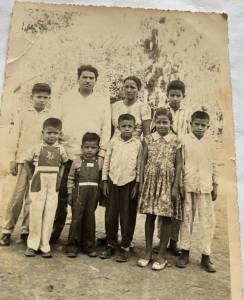
For much of the twentieth century, migrants were predominantly young people and working-age adults, with men predominating in the first waves, which later diversified into family migration. Their education varied and was generally limited during the twentieth century, although recent decades have seen rising levels of secondary and technical education.
These migrants brought local cultural forms, customs, dialects, religious expressions and culinary traditions that contributed to Mexico City’s cultural plurality.
Internal migration was an engine of urban growth. Without the constant arrival of workers from elsewhere in the country, industrialisation, expanding services and urban infrastructure would not have been possible. Migrants also transformed the city into a centre of hybrid culture, where regional and urban life intertwine: food, music, religious celebrations and artistic expressions reflect this interaction.
However, this massive concentration also generated structural problems: overcrowding, inadequate services, socio-spatial segregation and pressure on transport, health and education.
Unlike international migration, internal migration presents different challenges: migrants do not cross national borders, but must still negotiate recognition in a competitive and stratified urban space. Mexico City becomes a space of identity transformation, where people from other regions learn to integrate without giving up their regional roots.
The stories gathered here show that migrants do not leave from a position of comfort, but from exclusion, violence, lack of opportunities or the impossibility of being fully recognised. Yet it is precisely this experience of uprooting, constant effort and forced adaptation that leads them to see opportunities where others do not look, work where others do not wish to or cannot, and build meaning where the social fabric remains incomplete or is changing.
From Jewish physicians who were tolerated but not accepted, to farmers in Argentina’s littoral region, Lebanese traders in Latin America, Mexican braceros sustaining entire economies without rights, or young people from the provinces who reached Mexico City and, generation after generation, became professionals, business owners and cultural actors, the pattern is clear: hardship did not erase identity; it made it creative.
As a witness to this history, and in many cases a direct heir to it, I can say that migrants enrich the places they reach not despite the difficulties, but also because of them. Necessity compels people to learn, mix, innovate and pass things on. And this transmission of values, trades, languages, memories and aspirations does not remain within a single life: it expands into the host community.
History shows that when a society recognises migrants not only as labour but as full human beings, the result is a richer culture, a more dynamic economy and a broader idea of belonging. And even when that recognition remains incomplete, migrants leave their mark.
In that sense, migration is more than movement: it is active participation in building a shared world. And history, observed closely, confirms that places that dare to welcome and migrants who dare to stay become, together, more than they were separately.
Over time, those migrants or their descendants meet as family and friends.