

Migration is a phenomenon shared by most species. In the animal world, it involves cyclical or seasonal long-distance movements driven by survival and the search for better living conditions. It is an evolutionary strategy for resilience in an unstable environment.
For humans, migration begins with the first Homo sapiens. For more than 100,000 years, our ancestors were hunter-gatherers, moving with the seasons, water and herds. Around 70,000 years ago, some left Africa and spread across the planet.
Although these dates seem distant, they are recent on the geological timescale: Earth is 4.54 billion years old, crocodiles have existed for 200 million years and sharks for 400 million. We Homo sapiens appeared just 200,000 years ago. If we condensed the planet’s history into a single year, humanity would have emerged on 31 December at 23:36—only in the final minutes.
Why talk about migration?
Migration is not exclusive to humans, but in our species it becomes more complex. Cultural, economic and political motivations add to biological factors.
Initially, climate changes, the search for food and conflicts with other groups drove mobility. Later, other factors emerged: expanding empires, slavery, exile and colonisation. Over time, migration evolved from a survival instinct into a cultural, economic and political force that has shaped human history.

“Without migration, humanity as we know it would not exist.”
Ian Goldin
Who is a migrant?
A migrant is a person who moves from their usual place of residence to another, within or beyond their country, for economic, social, political, environmental or personal reasons. These circumstances may be voluntary or forced, regular or irregular, temporary or permanent.
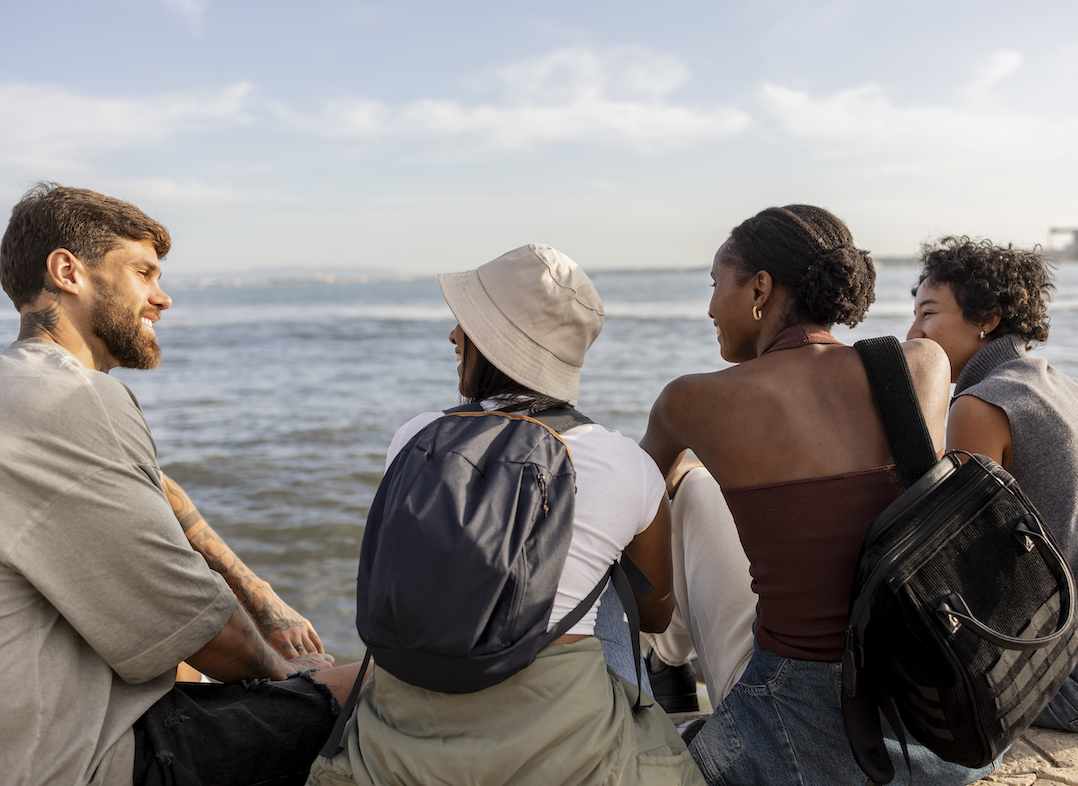
However, being a migrant means more than simply changing where one lives. A migrant’s identity is shaped by their motivations—from survival and the search for dignity to pursuing better opportunities—by the circumstances of their journey, whether voluntary or forced, regular or irregular, temporary or permanent, and by the historical and political context surrounding their decision.
While a sixteenth-century explorer might migrate for land and survival, a university graduate in the twenty-first century may do so for employment, dignity or safety. Today, migrants no longer travel backed by a Crown or an empire: they face complex laws, uncertain jobs and the need to defend their right to belong. Migration no longer means conquering land, but joining existing societies and navigating multicultural realities.
Migration is both an individual act reflecting each person’s hope and resilience and a collective phenomenon that transforms communities.
Our migration
One approach to discussing migration is to consider that migrants decide to move because of severe adversity in their places of origin, such as war, drug-related violence or limited employment opportunities. While these are undoubtedly powerful reasons to migrate, there are also other, less extreme factors.
Talking about migration also means talking about ourselves. Our decision to leave Mexico grew from a combination of adversity, curiosity and ambition.
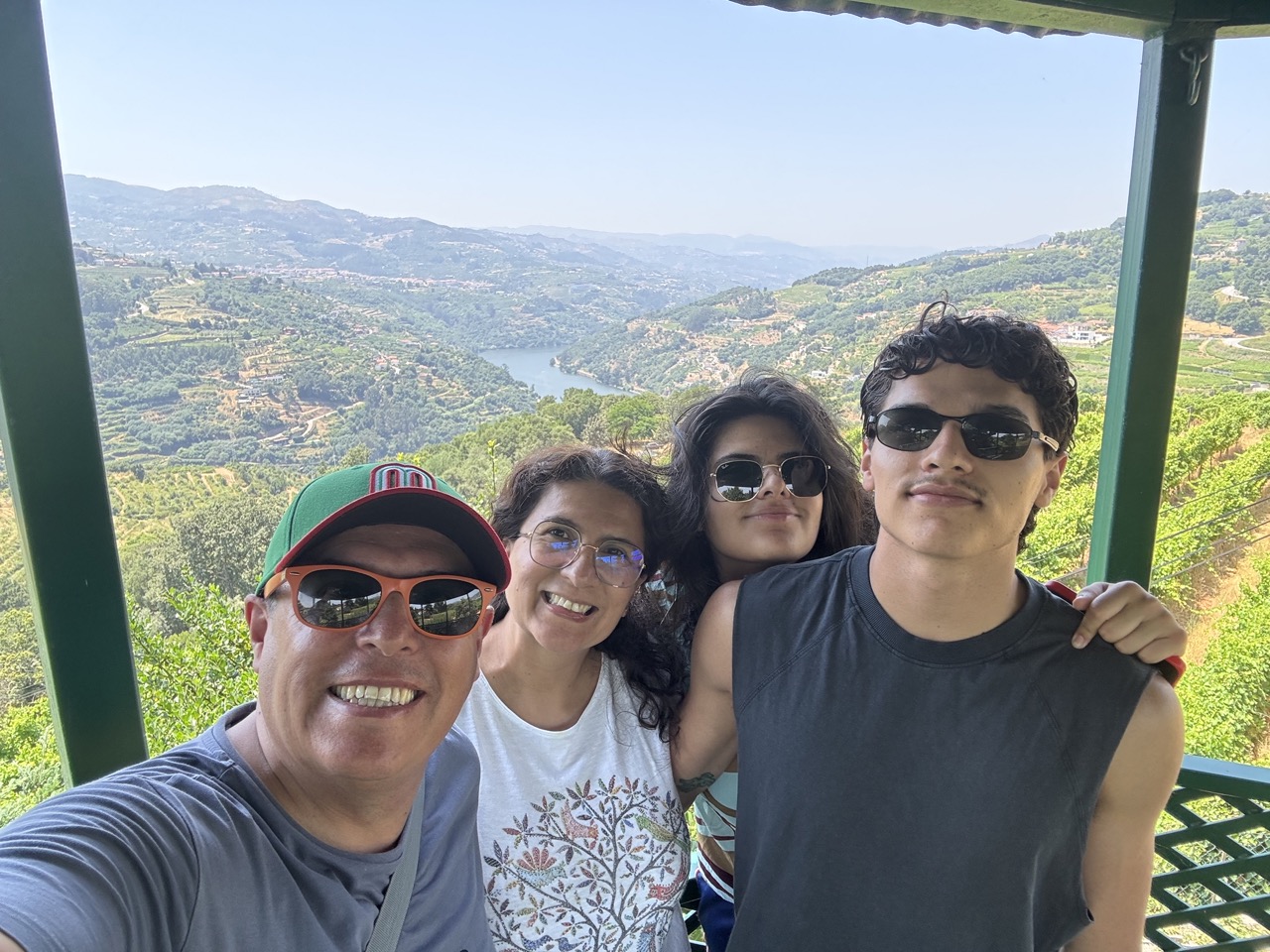
Current adversity in Mexico relates above all to the violence and insecurity experienced particularly by the middle class. Extortion affecting those of us who owned businesses, and the insecurity facing our teenage children, including the risk of kidnapping and disappearance, are reasons enough to reflect on the minimum quality of life we hope for ourselves and our families.
For years, we had run a company employing more than 50 professionals in design, engineering and heritage, with projects in Chile, Colombia and Spain. Then the pandemic arrived and work in Mexico disappeared, while we secured projects in Spain. At the same time, we were accepted into Startup Lisboa to establish our company here, with the possibility of migrating. Our project—technology and heritage—showed promise, and it was time to take a decisive step.
For our family, the move was decisive for our children. Our son discovered his calling as a cook early in life and, from the age of 14, dreamed of studying cooking in Europe. He did so in Portugal and, soon afterwards, was working in a Michelin-starred restaurant. Our younger daughter, talented in art and mathematics, needed a safe environment in which to grow and develop her creativity. In Mexico, the constant risks facing young women filled us with a fear that is difficult to explain. In Portugal, she found freedom and now studies product design, inspired by her passion for racing cars.
So, six years ago, we decided to settle in Portugal. The country has welcomed us with kindness and warmth, although we have also faced the challenges of integration and belonging.
mexa.pt
Migration is more than moving: it is bringing and taking, sharing and being transformed. Thanks to migrants, for example, the world knows tomatoes, chocolate and potatoes, as well as garlic, onions and wheat. The exchange of ingredients, techniques and knowledge has forever changed how people eat and live across the planet.
Mexa.pt aims to share ideas and reflections on how migration has enriched the world culturally and economically.
As migrants, we want to be a bridge: to share who we are and what we bring, while adapting and allowing ourselves to be transformed and enriched by the culture and people wherever we arrive.